






-
Retirement Accounts for Self-Employed People: SEP IRA, Solo 401(k), and SIMPLE IRA Explained
-
Taxes After a Spouse or Family Member Dies: A Guide for Surviving Families
-
IRS Tax Audit: Why You May Be Audited, What the IRS Can Ask For, and Your Rights
-
Can You Go to Jail for Not Paying Taxes? Tax Fraud and Tax Evasion Explained
-
When Do You Start Filing Taxes? Age, Income and Dependent Rules Explained
-
Tax Extension Deadline: When Is the Tax Filing Extension Due?
Income Tax
-

Retirement Accounts for Self-Employed People: SEP IRA, Solo 401(k), and SIMPLE IRA Explained
Working for yourself means taking responsibility for your own retirement savings. Without an employer automatically enrolling you in a retirement plan, it is easy to focus on business expenses and leave retirement planning for later. Self-employed people have several retirement account options, including a SEP IRA, solo 401(k), SIMPLE IRA, and personal traditional or Roth…
-
Taxes After a Spouse or Family Member Dies: A Guide for Surviving Families
The death of a spouse or family member can bring financial responsibilities at an already difficult time. Along with managing accounts and gathering documents, families may need to file a deceased person’s final tax return, claim a refund, and determine how the loss affects their own taxes. The tax rules depend on the person’s relationship…
-

IRS Tax Audit: Why You May Be Audited, What the IRS Can Ask For, and Your Rights
Receiving an IRS audit notice can be intimidating, but being selected for a tax audit does not automatically mean you did anything wrong. The IRS audits federal tax returns to determine whether income, deductions, expenses, and tax credits were reported correctly. Some tax returns are selected through computerized screening. Others are selected because information reported…
Small Business
-
Retirement Accounts for Self-Employed People: SEP IRA, Solo 401(k), and SIMPLE IRA Explained
Working for yourself means taking responsibility for your own retirement savings. Without an employer automatically enrolling you in a retirement plan, it is easy to focus on business expenses and leave retirement planning for later. Self-employed people have several retirement account options, including a SEP IRA, solo 401(k), SIMPLE IRA, and personal traditional or Roth…
-

Business Car Tax Write-Off: How to Deduct Vehicle Expenses and Mileage
A vehicle can be one of the most useful tax deductions for a small business owner. If you use your car, truck, SUV, or van for business, you may be able to deduct qualifying vehicle expenses or business mileage on your federal tax return. But there is an important distinction between business driving and personal…
-

Home Office Deduction: How to Write Off Home Office Expenses on Your Taxes
Working from home has become common for small business owners, freelancers, independent contractors, and self-employed professionals. If you regularly use part of your home for business, you may be able to claim a home office deduction on your federal tax return. The rules are more specific than simply having a desk at home. The IRS…
Corporate Tax
-

IRS Penalty Relief 2026: New Automatic Exemption From Penalties Explained
The IRS is changing the way certain federal tax penalties are handled in 2026. A new Automatic Exemption from Penalty (AEP) program is being phased in, potentially making it easier for qualifying taxpayers to receive relief from certain penalties without having to contact the IRS and request traditional First Time Abatement. This is an important…
-
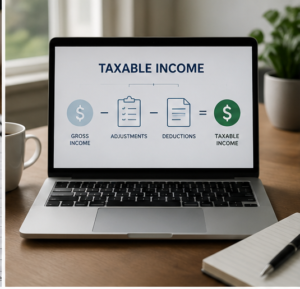
Understanding IRS Notices: What Taxpayers Should Do
Receiving a letter or notice from the IRS can be stressful, but an IRS notice does not automatically mean that you are being audited or that you have done something seriously wrong. In many cases, the IRS sends notices to request information, explain a change to a tax return, notify you about a balance due,…
-
IRS Tax Updates: Changes Taxpayers Should Know
Tax rules, filing requirements, deductions, credits, and IRS procedures can change from one year to the next. Staying informed can help taxpayers avoid mistakes, missed opportunities, and unexpected tax bills. The IRS regularly updates tax guidance and procedures affecting individuals, families, and businesses. Some changes are relatively minor, while others can have a noticeable effect…
IRS Updates
-

Medicaid Income Limits by State and Household Size: Eligibility Guidelines
Medicaid income limits determine whether a person or family may qualify for free or low-cost health coverage through Medicaid. However, there is no single Medicaid income limit that applies to everyone in the United States. Medicaid eligibility depends on several factors, including your state, household size, household income, age, pregnancy status, disability status, and the…
-

2026 SNAP Income Limits (Food Stamps) by Household Size
If you are looking for the 2026 SNAP income limits, food stamp income limits, or want to know whether you may qualify for SNAP benefits, your household income and household size are two of the most important factors. SNAP, officially called the Supplemental Nutrition Assistance Program, provides food benefits to eligible low-income households. The program…
-

2026 Federal Poverty Level (FPL): Income Limits by Household Size
The 2026 Federal Poverty Level (FPL) is an important income measure used to determine eligibility for many federal, state, and local assistance programs. The 2026 federal poverty guidelines are published by the U.S. Department of Health and Human Services (HHS). The amount depends on household size and location. This guide provides the 2026 poverty level,…
Tax Guides
-

Corporate Tax Rate in the United States: Federal and State Corporate Tax Rates
Understanding the corporate tax rate in the United States is important for businesses planning their taxes, estimating after-tax profits, and comparing the tax costs of operating in different states. For 2026, the federal corporate income tax rate is 21% for corporations subject to the regular corporate income tax. However, the actual tax burden for a…
-

Corporate Tax Deductions: How Companies Can Reduce Taxable Income
Corporate tax planning often comes down to understanding which business expenses can reduce taxable income. A corporation that keeps accurate records and properly identifies deductible expenses can avoid paying tax on income that is legitimately offset by business costs. The important distinction is that a deduction doesn’t directly reduce the tax bill. Instead, it reduces…
-

Corporate Tax Explained: How Businesses Are Taxed
Corporate tax can be confusing because the amount a business pays depends heavily on its business structure, taxable income, deductions, credits, and tax elections. A corporation also has different tax responsibilities from an individual taxpayer or a sole proprietor. Understanding how corporate income tax works is important for business owners, shareholders, and anyone considering forming…