
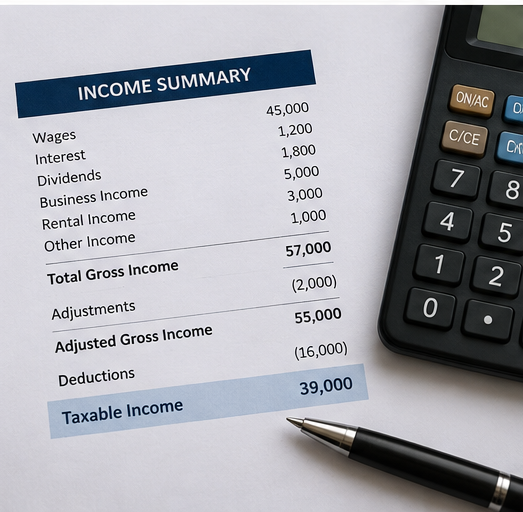
Making a mistake on a tax return does not necessarily mean the situation cannot be corrected. In many cases, taxpayers can file an amended tax return to correct information that was reported incorrectly on an original return.
An amended return can be used for certain changes involving income, deductions, credits, filing status, or other information.
When Should You Amend a Tax Return?
An amended return may be appropriate when the original return contains a significant error or omitted information.
Examples can include:
- Forgetting to report income
- Incorrect filing status
- Incorrect number of dependents
- Missing a qualifying deduction
- Missing a tax credit
- Incorrectly reported income
- Incorrectly reported deductions
- Changes resulting from corrected tax documents
Not every mistake requires an amended return. Some errors may be corrected by the IRS during normal processing, while certain mathematical or clerical errors may not require the taxpayer to file an amended return.
What Is Form 1040-X?
Individual taxpayers generally use Form 1040-X, Amended U.S. Individual Income Tax Return, to make corrections to a previously filed federal income tax return.
The amended return explains what was originally reported, what is being changed, and why the change is necessary.
The taxpayer should retain documentation supporting the correction.
What Happens If You Forgot Income?
If you discover that income was omitted from your original return, do not simply ignore it.
Review the tax document and compare it with the income reported on the original return.
If the additional income changes your federal tax liability, an amended return may be necessary.
Additional tax, interest, or penalties may apply depending on the circumstances.
What If You Forgot a Deduction or Credit?
Taxpayers sometimes discover after filing that they were eligible for a deduction or tax credit that was not included on the original return.
Depending on the specific tax benefit and applicable deadline, filing an amended return may allow the taxpayer to correct the return and potentially receive an additional refund.
Eligibility should be verified before claiming the benefit.
Amending a Return Does Not Automatically Mean an Audit
Some taxpayers worry that filing an amended return automatically triggers an IRS audit.
An amended return is simply a method of correcting certain information on a previously filed return. Filing one does not by itself mean that the taxpayer is being audited.
However, any tax return can be reviewed by the IRS, and taxpayers should ensure that corrections are accurate and properly documented.
Do You Need to Amend a State Tax Return?
A federal amended return can sometimes affect a state tax return.
If a change to federal taxable income also changes state taxable income, the taxpayer may need to file a state amended return.
State requirements and deadlines vary, so taxpayers should check the rules for the state involved.
Keep Documentation for the Amendment
Keep a copy of:
- The original tax return
- The amended tax return
- Corrected W-2 or 1099 forms
- Receipts
- Statements
- Worksheets
- Correspondence with the IRS
- Supporting documentation for deductions or credits
Good records can make it easier to explain the correction if the IRS later asks questions.
Check the Status After Filing
After submitting an amended return, taxpayers should monitor its processing status.
Amended returns can take longer to process than ordinary tax returns. Taxpayers should avoid submitting repeated amended returns simply because the first one has not been processed yet.
If the IRS requests additional information, respond according to the instructions provided in the notice.
Final Thoughts
Discovering an error after filing a tax return can be frustrating, but many mistakes can be corrected. The appropriate action depends on what was wrong with the original return and how the correction affects your tax liability.
Before filing an amended return, carefully review the original return, identify the exact error, gather supporting documentation, and verify the current IRS requirements.
Disclaimer: This article is for general informational purposes only and does not constitute tax, legal, or financial advice. Tax laws, IRS procedures, deadlines, and filing requirements can change. Consult a qualified tax professional or verify current information with the IRS for advice regarding your specific situation.